The wellbeing risk your EAP never hears about.
Gambling harm sits behind money stress, absenteeism, relationship breakdown and worse — and it is one of the last things a worker will ever raise. Betterself is a private, self-directed early layer: workers get real tools anonymously, and the employer only ever sees aggregate, de-identified signals.
No individual data. Ever. Anonymity is the architecture.
Why it concentrates in your workforce
Gambling harm skews heavily toward men, and toward shift-based, remote and high-disposable-income work. Research from the Australian National University has found problem-gambling rates among FIFO workers at around fifteen times the general population. Long swings, camp evenings, a phone and a betting app are a purpose-built pipeline — and shame keeps it invisible until the damage surfaces somewhere else in your incident data.
The program we're building
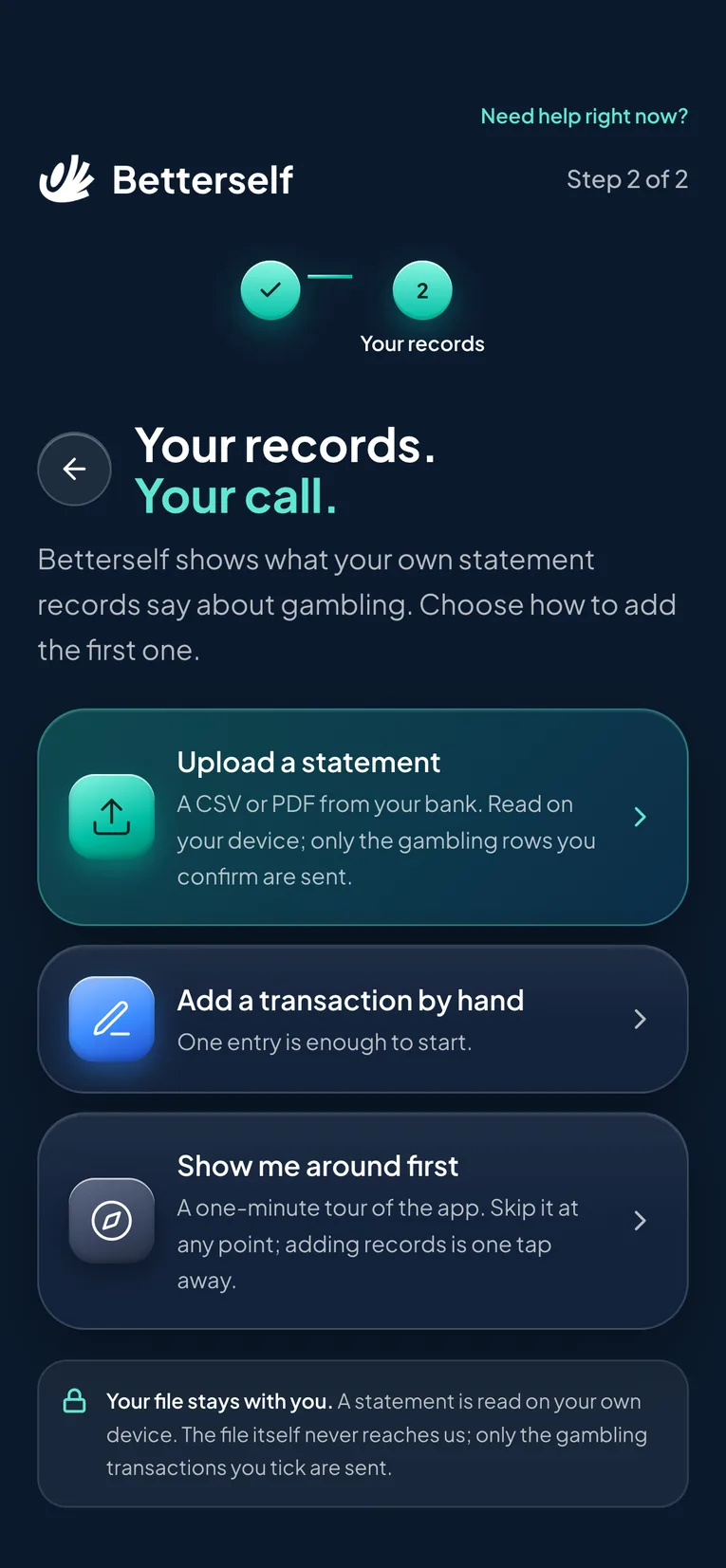
- A self-directed first step. Workers see their real spending, set their own limits, and get supportive check-ins — before anything needs to be called a "problem".
- Warm referral, not replacement. Betterself routes people toward the supports you already fund — EAP, counselling, crisis lines — when they're ready to use them.
- Aggregate signals for psychosocial-risk oversight. Designed so the employer sees participation and de-identified wellbeing trends only — evidence you're managing the risk, without surveilling anyone.
The boundaries we hold
No individual data. Ever. Anonymity isn't a policy setting a manager can flip; it's the architecture. No employer, in any configuration, can see a named worker's gambling data.
Voluntary, always. Betterself is offered, never mandated or monitored. A tool workers don't trust is a tool nobody opens.
No gambling-industry money. No advertising, sponsorships or operator investment — a line that matters when you put our name in front of your workforce.
The numbers behind the risk
problem-gambling rates found among FIFO workers vs the general population
WA men aged 18–24 who gamble show some level of gambling risk
would rather deal with it on their own than seek help
Sources: Australian National University FIFO research; WA gambling prevalence study — DLGIRS / Behavioural Insights Team (2025).
Where we're at
Straight up: the worker-facing app is in open beta for Australians, and its harm-reduction core is free; the employer program — rollout tooling and aggregate reporting — is in design, and we're shaping it with a small number of WA organisations. If gambling harm is on your psychosocial-risk radar and you want the early layer built around your workforce's reality, this is the moment your input counts most.
Talk to the founder directly — no sales team, no deck-first ambush.
Start a conversationThe button opens your email app — or write to hello@mybetterself.com.au